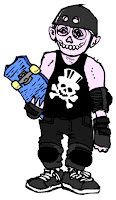
Skater Punks You know exactly what I am talking about. We have all seen them: the thrashed skate boards with nightmarish graphics, the bizarre array of boxers peeking out of the ridiculously baggy pants, jewelry protruding from places previously only inhabited by the stray hair trying to avoid being plucked, that's right, the skater punks. They aren't just boys or men; girls who played dress up and Barbie have thrown off the perception of pale pink and purple and are clad in black, brown, army green or any drab variation of the ominous colors Generation X has chosen for their coat of arms. Young men and women dress the same, walk the same, skate the same and sport the same flippantly arrogant attitude. What on earth would possess the youth of our nation to dress, behave and mutilate themselves in such a manner? Have you ever seen an X-Games skate board competition? These people are amazing. Why would you waste that athleticism and agility on a sport that has nothing to offer but a bad reputation, injury and trouble with the law?
"Mom, I'm home! Guess where Grandma took me to today. We found a skateboard at a garage sale and we bought it for $2.00 and we went to the skate park. It is so cool. I met some new friends and they showed me some tricks. Grandma is going to take me back next week," Conner, my then six year old, excitedly gushed as he walked through the front door.
Fear and anger seized me. I didn't know who to yell at first. Conner, seeing the fierce look in my eyes, yelled, "Grandma made me do it!" In her quest to become "cool," grandma had been turned to the "dark side." In Benedict Arnold style, facing battle and guaranteed desecration of her sainthood, she caved, switched allegiances, and sold me out for the price of a smile. I couldn't trust her, or the vipers she was now "hangin" with. Disbelief engulfed me like a dark, damp heavy cloud. My ally was gone, deserted; I stood alone to bear accusations like "you don't understand," "my friends who have cool parents get to skate," "you're closed minded and prejudiced," "just because you're old doesn't mean you know everything." The verbal battle was in full array and the arrows were hitting their target.
I pause from the narration at this time to relate an observation that has come as a morbid dose of reality for me. You will all have the following experience, at one time or another, it is unavoidable. You will supply grandchildren for your parents who have shamelessly begged, bribed, pleaded and blackmailed you to procreate. By giving in to their pleas you will have equipped them with the opportunity to earn their sainthood. Then, watching you stagger from a near fatal battle wound, they will step forward, take the sword from your child's hand and drive the final blow straight through your heart. With this one act they will forever endear themselves to your offspring and irrevocably reveal their true alliances— with them, against you.
'You know honey, you really should come check out the skate park before you make your final decision," a woman I did not know, who bore a striking resemblance to my mother, cooed logically. I spun around, a cornered, wild animal sensing the battle to ensue. "How dare you...We have talked endlessly about the problems with the youth of today, not the least of which is the 'skater-tude'... I entrusted my child to you and this is where you take him?...I don't care if he asked you to, be the adult,...show some back bone. You never had a problem saying the word 'no' when I was his age." My emotional diatribe was unashamedly being ignored. The traitor smiled, winked at Conner and said over her shoulder as she turned to leave: "Conner and I would be happy to let you tag along next time." I was speechless.
Defeated, weary from the staunch defense of ideals and perceptions my faculties began to call an all out retreat. "What could it hurt to go?...are you really afraid of some skater punks?...ratify your assumptions...prove your perceptions...isn't Conner worth your time...are you seriously going to let a 70-year-old grandma be more open-minded than you?" Finally with a sigh of surrender, "I'll go."
As I walked up the dirt trail to the "bowls" I tried to not look as scared as I felt. At first glance all I could see was concrete. There are two large "bowls" that are side by side and have a small lip that connects them. The "track" is the ring around the outer edge of the cement that incorporates two large ramps for building speed for jumps. In the middle there is a crisscross design with stairs and rails for "grinding." The design was ingenious, not much space but lots of options.
Conner threw his board down, put on his helmet, and off he rolled; around the track, up and down the ramps over and over, his smile spreading wider and wider across his innocent face. "Hi Conner," called a tall stereotypical skater. I bristled, started to step forward and the icy stiletto fingers from my childhood grabbed my arm. Without a word my mom rescued Conner from certain social death. "Hi Grandma, who's your friend?" the skater called out. Introductions were made and the grip on my perceptions began to erode.
Then my fears were realized, Conner took a nasty spill trying to grind. His board was too "sticky" to slide on the metal rail and he landed on his elbow and hip. To my surprise the skater punk got there before Conner's over protective mom. He gently picked him up, asked if he was okay, looked to make sure there was no blood, and walked him over to sit down.
"Next time borrow some of my wax to rub on the rail so it slides," came the helpful suggestion from the "punk." I was dumbfounded. Where were the "flippantly arrogant attitudes," disrespectful indifference, and the scorching defiant eyes? "He'll be okay, don't worry," the punk said reassuringly. "Thanks" I mumbled. "Mom, you said you rode a skateboard when you were young, try mine, its fun." "You rode a board? How cool, hop on and see if you remember how to roll" the skater kid smiled. "I wish my parents did something cool like that, then maybe they would understand. You are lucky Conner."
I didn't know whether to be embarrassed or proud. My tattle-tale conscience reminded me of those ten minutes earlier I was reciting the evils of skateboarding to myself. I cautiously placed Conner's board down and assumed the stance. The wheels rolled slowly at first, then faster and my confidence began to build. The adrenaline rush was instant. The faster I went the more intoxicated I felt. What a rush. I could do this all day.
"Mom, could I have my board now?""One more time around," I pleaded as I rolled quickly by."Come on mom, it's my board." I slowed down and jumped off. Conner took off and yelled "Hey mom, watch this."
Teachers come in all shapes, sizes and wear all kinds of different clothes. From eight to eighteen to seventy there are many different people from diverse walks of life that can show us things about who we are, who we think we are and most importantly who we want to become. I didn't change my choice of clothes, music or friends, but my custom board and pierced belly button have raised some eyebrows and given me the opportunity to do a little teaching of my own.
Original Source: realskate.com
"Mom, I'm home! Guess where Grandma took me to today. We found a skateboard at a garage sale and we bought it for $2.00 and we went to the skate park. It is so cool. I met some new friends and they showed me some tricks. Grandma is going to take me back next week," Conner, my then six year old, excitedly gushed as he walked through the front door.
Fear and anger seized me. I didn't know who to yell at first. Conner, seeing the fierce look in my eyes, yelled, "Grandma made me do it!" In her quest to become "cool," grandma had been turned to the "dark side." In Benedict Arnold style, facing battle and guaranteed desecration of her sainthood, she caved, switched allegiances, and sold me out for the price of a smile. I couldn't trust her, or the vipers she was now "hangin" with. Disbelief engulfed me like a dark, damp heavy cloud. My ally was gone, deserted; I stood alone to bear accusations like "you don't understand," "my friends who have cool parents get to skate," "you're closed minded and prejudiced," "just because you're old doesn't mean you know everything." The verbal battle was in full array and the arrows were hitting their target.
I pause from the narration at this time to relate an observation that has come as a morbid dose of reality for me. You will all have the following experience, at one time or another, it is unavoidable. You will supply grandchildren for your parents who have shamelessly begged, bribed, pleaded and blackmailed you to procreate. By giving in to their pleas you will have equipped them with the opportunity to earn their sainthood. Then, watching you stagger from a near fatal battle wound, they will step forward, take the sword from your child's hand and drive the final blow straight through your heart. With this one act they will forever endear themselves to your offspring and irrevocably reveal their true alliances— with them, against you.
'You know honey, you really should come check out the skate park before you make your final decision," a woman I did not know, who bore a striking resemblance to my mother, cooed logically. I spun around, a cornered, wild animal sensing the battle to ensue. "How dare you...We have talked endlessly about the problems with the youth of today, not the least of which is the 'skater-tude'... I entrusted my child to you and this is where you take him?...I don't care if he asked you to, be the adult,...show some back bone. You never had a problem saying the word 'no' when I was his age." My emotional diatribe was unashamedly being ignored. The traitor smiled, winked at Conner and said over her shoulder as she turned to leave: "Conner and I would be happy to let you tag along next time." I was speechless.
Defeated, weary from the staunch defense of ideals and perceptions my faculties began to call an all out retreat. "What could it hurt to go?...are you really afraid of some skater punks?...ratify your assumptions...prove your perceptions...isn't Conner worth your time...are you seriously going to let a 70-year-old grandma be more open-minded than you?" Finally with a sigh of surrender, "I'll go."
As I walked up the dirt trail to the "bowls" I tried to not look as scared as I felt. At first glance all I could see was concrete. There are two large "bowls" that are side by side and have a small lip that connects them. The "track" is the ring around the outer edge of the cement that incorporates two large ramps for building speed for jumps. In the middle there is a crisscross design with stairs and rails for "grinding." The design was ingenious, not much space but lots of options.
Conner threw his board down, put on his helmet, and off he rolled; around the track, up and down the ramps over and over, his smile spreading wider and wider across his innocent face. "Hi Conner," called a tall stereotypical skater. I bristled, started to step forward and the icy stiletto fingers from my childhood grabbed my arm. Without a word my mom rescued Conner from certain social death. "Hi Grandma, who's your friend?" the skater called out. Introductions were made and the grip on my perceptions began to erode.
Then my fears were realized, Conner took a nasty spill trying to grind. His board was too "sticky" to slide on the metal rail and he landed on his elbow and hip. To my surprise the skater punk got there before Conner's over protective mom. He gently picked him up, asked if he was okay, looked to make sure there was no blood, and walked him over to sit down.
"Next time borrow some of my wax to rub on the rail so it slides," came the helpful suggestion from the "punk." I was dumbfounded. Where were the "flippantly arrogant attitudes," disrespectful indifference, and the scorching defiant eyes? "He'll be okay, don't worry," the punk said reassuringly. "Thanks" I mumbled. "Mom, you said you rode a skateboard when you were young, try mine, its fun." "You rode a board? How cool, hop on and see if you remember how to roll" the skater kid smiled. "I wish my parents did something cool like that, then maybe they would understand. You are lucky Conner."
I didn't know whether to be embarrassed or proud. My tattle-tale conscience reminded me of those ten minutes earlier I was reciting the evils of skateboarding to myself. I cautiously placed Conner's board down and assumed the stance. The wheels rolled slowly at first, then faster and my confidence began to build. The adrenaline rush was instant. The faster I went the more intoxicated I felt. What a rush. I could do this all day.
"Mom, could I have my board now?""One more time around," I pleaded as I rolled quickly by."Come on mom, it's my board." I slowed down and jumped off. Conner took off and yelled "Hey mom, watch this."
Teachers come in all shapes, sizes and wear all kinds of different clothes. From eight to eighteen to seventy there are many different people from diverse walks of life that can show us things about who we are, who we think we are and most importantly who we want to become. I didn't change my choice of clothes, music or friends, but my custom board and pierced belly button have raised some eyebrows and given me the opportunity to do a little teaching of my own.
Original Source: realskate.com