Showing posts with label Children. Show all posts

Friday, October 5, 2007

Over-protective parents robbing children of their childhood

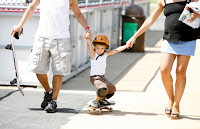
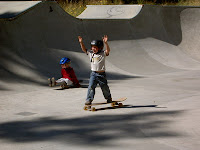
Get the kids a skateboard and let them go outside.
Over-protective parents are warned today that they are denying youngsters a proper childhood by keeping them indoors playing video games instead of letting them outside to play. A group of almost 300 teachers, psychologists, authors and childcare experts claim the loss of unstructured play is threatening the health and well-being of a generation.

They say that loosely supervised fun is crucial for keeping children active, teaching them to deal with risk and learn to get on with others. But parental anxiety over "stranger danger" is conspiring with high volumes of traffic, aggressive marketing of commercialised toys and screen entertainment to rob children of opportunities to enjoy traditional play.

The warning comes in an open letter signed by, among others, children's author Philip Pullman, childcare expert Dr Penelope Leach and Baroness Susan Greenfield, director of the Royal Institution.

The signatories also include 60 psychologists and psychotherapists, more than 40 university professors, plus leaders of teaching unions and children's charities.

A similar letter a year ago voiced fears that childhood was being "poisoned" by a damaging mix of junk food, all-day TV and violent computer games.

That warning, backed by the Archbishop of Canterbury, sparked a national inquiry on the state of childhood which is due to report next year. In the latest letter, experts warn that the loss of opportunities for play is a major factor in the rise of mental health and behavioural problems in recent years. They say research has deepened concern that youngsters are facing a mental health crisis.

They point to the finding by Unicef that Britain's children are among the unhappiest in the developed world, adding: "We believe that a key factor in this disturbing trend is the marked decline over the last 15 years in children's play."

The letter goes on to insist that play, particularly outdoors, is vital to children's all-round health and well-being. The letter was organised by writer Sue Palmer, whose book Toxic Childhood sparked a national debate on the issue, and Dr Richard House, a senior lecturer in psychotherapy at Roehampton University.

"Real play - socially interactive, first-hand, loosely supervised - has always been a vital part of children's development, and its loss could have serious implications," they said.

"Just as the epidemic of childhood obesity recently took the developed world by surprise, too much 'junk play' could - like too much junk food - have alarming implications for the next generation.

"We hope this letter helps draw attention to the importance of giving the next generation time, space and encouragement to go 'out to play'."

Mrs Palmer added: "We have become over-protective in certain ways and letting go is one of the hardest things.

"But there is a limit to the extent we can protect children physically - they have to become capable of protecting themselves as well."

Original Source: Daily Mail, By Laura Clark

Skater Punks, an essay by Kathy Fish

Skaters Need Skateboards. Don't just sit there, Get involved Today!
Skater Punks You know exactly what I am talking about. We have all seen them: the thrashed skate boards with nightmarish graphics, the bizarre array of boxers peeking out of the ridiculously baggy pants, jewelry protruding from places previously only inhabited by the stray hair trying to avoid being plucked, that's right, the skater punks. They aren't just boys or men; girls who played dress up and Barbie have thrown off the perception of pale pink and purple and are clad in black, brown, army green or any drab variation of the ominous colors Generation X has chosen for their coat of arms. Young men and women dress the same, walk the same, skate the same and sport the same flippantly arrogant attitude. What on earth would possess the youth of our nation to dress, behave and mutilate themselves in such a manner? Have you ever seen an X-Games skate board competition? These people are amazing. Why would you waste that athleticism and agility on a sport that has nothing to offer but a bad reputation, injury and trouble with the law?

"Mom, I'm home! Guess where Grandma took me to today. We found a skateboard at a garage sale and we bought it for $2.00 and we went to the skate park. It is so cool. I met some new friends and they showed me some tricks. Grandma is going to take me back next week," Conner, my then six year old, excitedly gushed as he walked through the front door.

Fear and anger seized me. I didn't know who to yell at first. Conner, seeing the fierce look in my eyes, yelled, "Grandma made me do it!" In her quest to become "cool," grandma had been turned to the "dark side." In Benedict Arnold style, facing battle and guaranteed desecration of her sainthood, she caved, switched allegiances, and sold me out for the price of a smile. I couldn't trust her, or the vipers she was now "hangin" with. Disbelief engulfed me like a dark, damp heavy cloud. My ally was gone, deserted; I stood alone to bear accusations like "you don't understand," "my friends who have cool parents get to skate," "you're closed minded and prejudiced," "just because you're old doesn't mean you know everything." The verbal battle was in full array and the arrows were hitting their target.

I pause from the narration at this time to relate an observation that has come as a morbid dose of reality for me. You will all have the following experience, at one time or another, it is unavoidable. You will supply grandchildren for your parents who have shamelessly begged, bribed, pleaded and blackmailed you to procreate. By giving in to their pleas you will have equipped them with the opportunity to earn their sainthood. Then, watching you stagger from a near fatal battle wound, they will step forward, take the sword from your child's hand and drive the final blow straight through your heart. With this one act they will forever endear themselves to your offspring and irrevocably reveal their true alliances— with them, against you.

'You know honey, you really should come check out the skate park before you make your final decision," a woman I did not know, who bore a striking resemblance to my mother, cooed logically. I spun around, a cornered, wild animal sensing the battle to ensue. "How dare you...We have talked endlessly about the problems with the youth of today, not the least of which is the 'skater-tude'... I entrusted my child to you and this is where you take him?...I don't care if he asked you to, be the adult,...show some back bone. You never had a problem saying the word 'no' when I was his age." My emotional diatribe was unashamedly being ignored. The traitor smiled, winked at Conner and said over her shoulder as she turned to leave: "Conner and I would be happy to let you tag along next time." I was speechless.

Defeated, weary from the staunch defense of ideals and perceptions my faculties began to call an all out retreat. "What could it hurt to go?...are you really afraid of some skater punks?...ratify your assumptions...prove your perceptions...isn't Conner worth your time...are you seriously going to let a 70-year-old grandma be more open-minded than you?" Finally with a sigh of surrender, "I'll go."

As I walked up the dirt trail to the "bowls" I tried to not look as scared as I felt. At first glance all I could see was concrete. There are two large "bowls" that are side by side and have a small lip that connects them. The "track" is the ring around the outer edge of the cement that incorporates two large ramps for building speed for jumps. In the middle there is a crisscross design with stairs and rails for "grinding." The design was ingenious, not much space but lots of options.

Conner threw his board down, put on his helmet, and off he rolled; around the track, up and down the ramps over and over, his smile spreading wider and wider across his innocent face. "Hi Conner," called a tall stereotypical skater. I bristled, started to step forward and the icy stiletto fingers from my childhood grabbed my arm. Without a word my mom rescued Conner from certain social death. "Hi Grandma, who's your friend?" the skater called out. Introductions were made and the grip on my perceptions began to erode.

Then my fears were realized, Conner took a nasty spill trying to grind. His board was too "sticky" to slide on the metal rail and he landed on his elbow and hip. To my surprise the skater punk got there before Conner's over protective mom. He gently picked him up, asked if he was okay, looked to make sure there was no blood, and walked him over to sit down.

"Next time borrow some of my wax to rub on the rail so it slides," came the helpful suggestion from the "punk." I was dumbfounded. Where were the "flippantly arrogant attitudes," disrespectful indifference, and the scorching defiant eyes? "He'll be okay, don't worry," the punk said reassuringly. "Thanks" I mumbled. "Mom, you said you rode a skateboard when you were young, try mine, its fun." "You rode a board? How cool, hop on and see if you remember how to roll" the skater kid smiled. "I wish my parents did something cool like that, then maybe they would understand. You are lucky Conner."

I didn't know whether to be embarrassed or proud. My tattle-tale conscience reminded me of those ten minutes earlier I was reciting the evils of skateboarding to myself. I cautiously placed Conner's board down and assumed the stance. The wheels rolled slowly at first, then faster and my confidence began to build. The adrenaline rush was instant. The faster I went the more intoxicated I felt. What a rush. I could do this all day.

"Mom, could I have my board now?""One more time around," I pleaded as I rolled quickly by."Come on mom, it's my board." I slowed down and jumped off. Conner took off and yelled "Hey mom, watch this."

Teachers come in all shapes, sizes and wear all kinds of different clothes. From eight to eighteen to seventy there are many different people from diverse walks of life that can show us things about who we are, who we think we are and most importantly who we want to become. I didn't change my choice of clothes, music or friends, but my custom board and pierced belly button have raised some eyebrows and given me the opportunity to do a little teaching of my own.

Original Source: realskate.com

Friday, September 28, 2007

Your Kid Doesn't Like Sports? They Can Still Stay Fit

Get those kids involved in outdoor activities, skateboarding is great for balance speed stamina and confidence Team sports can help a child gain self-esteem, coordination, and general fitness, and help them learn how to work with other kids and adults. But some kids aren't natural athletes and they may tell you - directly or indirectly - that they just don't like sports. What then?

Why Some Kids Don't Like Teams

Every child doesn't have to join a team, and with enough other activities, kids can be fit without them. But it's a good idea to find out why your child isn't interested. You might be able to help solve any deeper concerns your child might be having, or steer your child toward something else. Talk with your child and let him or her know that you'd like to work on a solution together. That solution might mean making changes and sticking with the team sport or finding a new activity to try.

Here are some reasons why sports might be a turnoff for a child:

Still Developing Basic Skills

Though many sports programs are available for preschoolers, it's not until about age 6 or 7 that most kids have the physical skills, the attention span, and the ability to grasp the rules needed to play organized sports. If your child hasn't had much practice in a specific sport, it may take a while for him or her to be expected to reliably perform necessary skills such as kicking a soccer ball on the run or hitting a baseball thrown from the pitcher's mound. Trying and failing, especially in a game situation, might frustrate your child and make him or her nervous.

What You Can Do. Practice with your child at home. Whether you're shooting baskets, playing catch, or going for a jog together, you're giving your child an opportunity to build his or her skills and fitness in a safe environment. Your child can freely try - and risk failing - new things without the self-consciousness of being around his or her peers. And you're also getting a good dose of quality together time.

Coach or League Is Too Competitive

A kid who's already a reluctant athlete might feel extra-nervous when the coach barks out orders or the league focuses heavily on winning.

What You Can Do. Investigate sports programs before signing your child up for one. Talk with coaches and other parents about the philosophy. Some athletic associations, like the YMCA, have noncompetitive leagues. In some programs, they don't even keep score.

Keep in mind that as kids get older, they can handle more competitive aspects such as keeping score and keeping track of wins and losses for the season. Some kids may be motivated by competitive play, but the average child may not be ready for the increased pressure until he or she is 11 or 12 years old. Remember that even in more competitive leagues, the atmosphere should remain positive and supportive for all the participants.

Stage Fright

If your child isn't a natural athlete, or is a little shy, he or she might be uncomfortable with the pressure of being on a team. More self-conscious kids also might worry about letting their parents, coaches, or teammates down. This is especially true if the child is still working on basic skills and if the league is very competitive.

What You Can Do. Keep your expectations realistic - most kids don't become Olympic medalists or get sports scholarships. Let your child know the goal is to be fit and have fun. If the coach or league doesn't agree, it's probably time to look for something new.

Still Shopping for a Sport

Some kids haven't found the right sport. Maybe your child didn't have the hand-eye coordination for baseball, but he or she has the drive and the build to be a swimmer, a runner, or a cyclist. The idea of an individual sport also can be more appealing to some kids who like to go it alone.

What You Can Do. Be open to your child's interests in other sports or activities. That can be tough if, for instance, you just loved basketball and wanted to continue the legacy. But by exploring other options, you give your child a chance to get invested in something he or she truly enjoys.

Other Barriers

Different kids mature at different rates, so it's common for there to be a wide range of heights, weights, and athletic abilities among kids of the same age group. So if your child is much bigger or smaller than other kids of the same age - or less coordinated or not as strong - he or she may feel self-conscious and uncomfortable competing with them. Your child also may be afraid of getting injured, or worried that he or she can't keep up. A child who is overweight might be reluctant to participate in a sport, for example, while a child who has asthma might feel more comfortable with sports that require short outputs of energy, like baseball, football, gymnastics, downhill skiing, and shorter track and field events.

What You Can Do. Give some honest thought to your child's strengths, abilities, and temperament, and find an activity that might be a good match. Some kids are afraid of the ball, so they don't like softball or volleyball, but may enjoy an activity like running. If your child is overweight, he or she might lack the endurance to run, but might enjoy a sport like swimming. Your child may be too short for the basketball team, but may enjoy gymnastics or wrestling.

Keep in mind that some kids just prefer sports that focus on individual performance rather than teamwork. Remember that the goal is to prevent your child from feeling frustrated, wanting to quit, and being turned off from sports and physical activity altogether.

With good communication, you may be able to address your child's concerns. Other issues may naturally fade as your child grows. If you can understand what your child is going through and provide a supportive environment, you can help your child succeed in whatever activity he or she chooses.

Ways to Stay Fit Outside of Team SportsEven kids who once said they hated sports might learn to like team sports as their skills improve, or if they find the right sport or a league with the right level of intensity. But even if team sports never thrill your child, there's plenty a kid can do to get the recommended 60 minutes or more of physical activity each day.

Free play can be very important for a child who doesn't play a team sport. What's free play? It's the activity kids get when they're left to their own devices, like shooting hoops, riding bikes, playing whiffleball, playing tag, jumping rope, or dancing.

Outside of the most common team sports, your child might want to try individual sports or other organized activities that can boost his or her fitness. Here are some ideas:

skateboarding
cycling
inline skating
martial arts
swimming
horseback riding
dance classes
cheerleading
hiking
golf
tennis
fencing
gymnastics
yoga and other fitness classes
Ultimate Frisbee
running

Supporting Your Kid's Choices

Even if the going's tough, work with your child to find something active that he or she likes. Try to remain open-minded. Maybe your child is interested in an activity that is not offered at his or her school. If your daughter wants to try flag football or ice hockey, for example, help her find a local league or talk to school officials about starting up a new team.

You'll need to be patient if your child has difficulty choosing and sticking to an activity. It often takes several tries before a child finds one that feels like the right fit. But when something clicks, you'll be glad you invested the time and effort. For your child, it's one big step toward developing active habits that can last a lifetime.

Original Source: kidshealth.org

Thursday, September 27, 2007

Childhood Obesity - Lets take a look at the toys.

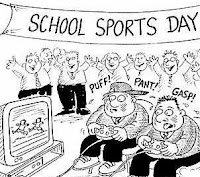
Step away from the controller, get up off the couch and really go skateboarding
There is no arguing that today's teens are in a poor state of health. A recent studies point the finger at the toys our kids play with. This year's hot Christmas toys include Next Gen video game systems, Halo 3, Skate, and a range of others games, Hand Helds, Cell phones, ringtones, Computers, Bratz and Star Wars toys, but not a single toy which encourages physical activity or outdoor play.

The survey notes that the most popular toys during the 1970s were mostly related to physical activity; however, the Toy Retail Association site shows that lego toys tended to be the most popular. During the 70's a number of hit toys, which encouraged outdoor play, were hugely popular such as the spacehopper, rollerskates, the Chopper bicycle, stunt kites, and skateboards. Now we are in the age of electronica. Technology is useful, helpful, and fun but it can also make us lazy and stressed.

Wednesday, September 26, 2007

Exercise and Fitness for Kids

Children need to play move and learn get them involved in skateboarding today
Although poor eating habits get a lot of the blame for the rise in childhood obesity, another very big factor is that kids just aren't as active as they used to be. Unfortunately, the focus for many people on battling childhood obesity is only on improving nutrition, like making school lunches more nutritious and taking soda out of schools, but doesn't do enough to actually get kids more active. As with improving their child's eating habits, parents can have an important role in helping their kids more physically active. In addition to more physically active, unorganized free play, getting involved in youth sports, such as soccer, baseball, and gymnastics, etc., can be a good way to encourage kids to be active.

How Young Is Too Young For Sports?

Since most youth sports programs for young children are very noncompetitive and are just about getting kids to be active and learning some basic rules, even older toddlers and preschoolers can play some sports. In fact, many communities now have programs like Soccer Tots for toddlers who are 20 months and older. Depending on where you live, you might also find:

Gymnastics - gymnastics programs are available for kids at almost any age, even infants and toddlers, like at The Little Gym, and get more physically demanding as your child gets older.

Swimming - although the AAP doesn't recommend formal swimming lessons until children are 4 years old, an introduction to the water type Aquatics program is okay for toddlers if they are well supervised.

Flag Football - typically age 4 and above.

T-ball - typically age 4 to 7.

Soccer - the YMCA has a Small Fry Soccer program for preschoolers over age 3.


Your local YMCA and their Youth Super Sports program is a good place to look for noncompetitive sports for younger kids. You might also find a youth sports program through your city, a private association, or a larger church in your area. Keep in mind that youth sports that are run by private associations tend to be more competitive than the YMCA, church groups, and most city leagues. Benefits of Starting Sports Early

Although some parents try to avoid youth sports until their kids are older, like 9 or 10 years old, because they want to avoid what they think is a competitive environment for their younger children, it is important to remember that most youth sports for younger kids are noncompetitive. Of course, you could have your 7 year old tryout for a tournament baseball team that travels from state to state with the goal of going to the Little League World Series or a football team that practices 4 days a week, and they would both likely be ultra-competitive. But you could just as easily join a team at the YMCA that doesn't have tryouts and doesn't keep score.

Some benefits of starting sports early, in addition to teaching responsibility, teamwork, and commitment, etc., include:


  • Avoiding childhood obesity.

  • Encouraging a healthy lifestyle and continued physical activity as they get older.

  • Building motor skills.

  • Making new friends.

  • Less time to watch TV.


And if your child starts playing sports early, he or she can play a variety of sports, or all of them, and get a better idea of which one they like best.

Team Sports vs Individual Sports

In addition to differences in motor skills and how well they play sports, kids can have very different personalities and temperaments. Some are outgoing and competitive and love to play team sports, like soccer, basketball, and baseball, while others are overwhelmed with the idea of being on the field with a large group of kids. If your child isn't interested in team sports, that doesn't mean that he can't be active.

There are many individual sports that might be a better fit, including:


  • skateboarding

  • surfing

  • swimming

  • biking

  • gymnastics

  • wrestling

  • tennis

  • golf

  • martial arts

  • track and field

  • dance


Keep in mind that some kids don't like team sports simply because they had a bad experience with one sport, team, or coach, and you might give another team or sport a chance or join a new team with a close friend so that he feels more comfortable.

Helping a Late Bloomer

Some children don't like sports because they just aren't as good as the other kids on the team. Especially for younger kids, there can be sharp differences in their abilities and developmental levels, but instead of giving up on sports, it can be a good idea to get your child some extra help so he can catch up. This can include gymnastics classes to improve general motor skills, enrolling in a skill and fitness program to help develop your child's athletic skills, extra practice at home, or getting some lessons in the specific sport you are playing.

Original Source: About.com, Vincent Iannelli, M.D.

Keeping the Family Fit

Get those kids off the couch and outside skating
Getting fit is almost always at the top of adults’ to do list. But what about the kids? Too often couch-potato parents raise stroller-potato youngsters. With 10 percent of 2 to 5-year-olds and 16 percent of 6-to19-year-olds already overweight in the United States—and rising obesity rates in the rest of the world, experts say it’s crucial to get children moving early. Habits formed in childhood can often extend through adulthood. As New York pediatrician Jennifer Trachtenberg notes, “active kids do become active adults.” But that doesn't mean dragging your kids to the gym every day. “Any type of exercise is good, as long as it’s supervised, and parents are using common sense," says Keith Gorse, chair of the age-specific task force for the National Athletic Trainers’ Association.

Girls and boys just want to have fun. So let them. “Kids should play. They should move. They’re wired for these things naturally,” says pediatrician Peter Belamarich, associate professor of clinical pediatrics at the Albert Einstein College of Medicine in New York. Don’t forget to get down on the floor and play with your kids. Mike Monroe, a New York-certified strength and conditioning specialist who is lead trainer for an exercise program called PUSH, lets his 1-year-old son, Miles, crawl around him and on top of him. He also rolls a ball to Miles’s right side and then to his left. “People overanalyze what they think will help advance their kid,” says Monroe. Cedric Bryant, chief exercise physiologist for the American Council on Exercise, says he was like a “tree” for his four sons, now 10, 13, 15 and 17, when they were little, encouraging them to climb all over him. “One of the biggest mistakes parents make is to think it really has to be this really complex, packaged program and approach,” says Bryant. “The key is just to get your children to move. Just make sure it’s fun.” Don’t rush into organized sports. The American Academy of Pediatrics recommends only 15 minutes of “structured activity” for preschoolers. After all, little kids’ attention spans are short, and they should be playing and exploring rather than doing formal calisthenics. The AAP statement also notes that participating in sports that aren’t age appropriate can cause problems: “When the demands of a sport exceed a child’s cognitive and physical development, the child may develop feelings of failure and frustration.” Enrolling them in ballet or gymnastics for tots is fine, with a caveat. “The key is not to take it too seriously,” says Dr. Angela Smith, an orthopedic surgeon at the Children’s Hospital of Philadelphia who is past president of the American College of Sports Medicine. Whether your child grows into a basketball superstar comes down to nature and nurture, says Small. “There’s genes and what you do with those genes.”

Turn off the television. The American Academy of Pediatrics recommends no TV for kids under 2, and no more than two hours of total screen time (TV, videogames, computers) for older children. Belamarich, a New York pediatrician, finds it sad when he asks kids to tell him about their hobbies and they say Playstation and XBox. “I’m seeing a bunch of kids pushing buttons hour after hour,” he says. Kids who watch more than 10 hours of TV each week are more likely to be overweight, aggressive and slow to learn in school, according to the American Medical Association. There are also concerns that kids who are “over stimulated” by TV and videos may be more prone to Attention Deficit Disorder. If your kids can’t resist the lure of the computer, have them engage in a “learning activity instead of a mindless activity,” says Vehrs of BYU.

Be a good role model. “Set the example of knowing that activity is as important as brushing your teeth,” says Sandra Perlmutter, former executive director of the President’s Council on Physical Fitness and Sports and an adviser to a company called athleticBaby. It’s good for kids to see you head out on a run. (But don’t take them with you in a Baby Jogger until they’re at least six months old because they lack sufficient control of their heads.) Walk with your little ones. Or get them to “exercise” with you. Every day, Baton Rouge, La., speech pathologist April Garrity, 29, and her daughter, Susanna, do “downward facing dog” and other yoga moves together. Susanna also likes doing push-ups along with her dad. “They see us working out,” says Garrity. And they naturally want to join in the fun.

Environmental Design Changes: Ways to Help Reduce Childhood Obesity

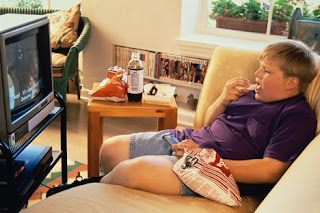
This kid needs a skateboard and to go outside and play!

Did you know that physical inactivity has been documented to cause numerous physical and mental health problems, is responsible for an estimated 200,000 deaths per year, and is shown to contribute to the obesity epidemic? Among preschool children and adolescents, obesity has doubled since the 1970s. The percentage of obese children 6 to 11 years old has tripled. Turning these statistics around means increasing children’s physical activity and improving what they eat. Much research has focused on educating children and changing their behavior, but these approaches have had limited success. Changing the environments in which children eat and play is now seen as an essential strategy in fighting the obesity epidemic.

Environmental barriers to healthy eating and activity

A panel of experts convened by the Institute of Medicine recently identified five factors in the environment that are barriers to healthy eating and physical activity for children:

• Pressures on families to minimize food costs and preparation time, resulting in frequent consumption of convenience foods high in calories and fat;

• Reduced access to and affordability of fruits, vegetables, and other nutritious foods;

• Urban and suburban designs that discourage walking and other physical activities;

• Decreased opportunities for physical activity at school, after school, and reduced walking or biking to and from school;

• Competition for leisure time that was once spent playing outdoors with sedentary screen time.

Listed below are some ways to change these five environmental factors to help solve the childhood obesity epidemic:

Changing the environment to increase children’s physical activity:

Safe places to walk and play help children to be more active. Many children and youth lack opportunities to be physically active. Walking or bicycling to school is increasingly uncommon and daily physical education has been cut from most schools (only 6 percent of middle schools provide it). More than one-third of high-school students nationwide are not getting recommended levels of moderate or vigorous physical activity.

Children need safe and accessible places where they can be active. Special attention may be needed for lower-income and minority communities, which tend to have fewer parks, sports facilities, bike paths, pools, and other places to be active.

There is strong evidence that access to facilities, like parks, and activity programs is associated with more activity for both children and adolescents. Some studies of preschool children have found that the more time spent outdoors, the higher the activity level.

Active living for children: The trip to school

Children can get regular, sustained physical activity walking, bicycling, or skateboarding between home and school, but distance, traffic, and crime are all barriers. Research shows environmental changes can help.

More children walked to school where there were sidewalks. For example, A Safe Routes to School program in Marin County, California, that included both safety improvements and encouragement, increased the number of children walking to school by 64 percent in two years. Children whose route to school passed a completed Safe Routes to School safety project at 10 elementary schools in California were more likely to increase walking to school (15%) than children whose route did not pass the improvement (4%).

Creating activity-friendly environments at school

Once at school, research shows the environment influences children’s activity levels. This environment includes the presence of effective PE classes and opportunities to be active during recess and the lunch break. A Centers for Disease Control review of 14 studies found that enhancing PE classes by increasing their length, or having students be more active throughout the class, consistently improved students’ physical fitness.

Five to seven year old students spent 18 additional minutes per day in active play after the pavement on school grounds was marked for play. Providing balls and other equipment to ten and eleven year olds increased their active play during recess by 24 percent.

Middle school students were more active throughout the school day if school activity areas had more facilities and if equipment and supervision were provided.

Improving safety to increase activity

In at least one study, adolescent girls were less active outdoors when they lived in high-crime neighborhoods. Parental concerns about traffic and ‘stranger danger’ are clearly linked to children’s activity levels. A Chicago study found children were physically active for an extra 49 minutes a week in safer neighborhoods than in unsafe neighborhoods.

Traffic safety is critical, pedestrian injuries are a leading cause of injury death for children five years and older. Several studies show that specific street improvements can improve child pedestrian safety. Speed bumps reduce the chance of child injury. Children were about half as likely to be injured by a car in their neighborhood if they lived within a block of a speed bump. It is more important and probable to reduce speed than to reduce traffic volume to improve child safety.

Changing the environment to reduce screen time

Kids spend more time watching TV than in school. While the results are somewhat mixed, studies show that TV and video time may encourage obesity both by displacing time that might be spent being physically active and through exposure to advertisements that encourage children to eat high-calorie, low nutrition foods. The American Academy of Pediatrics and Healthy People 2010 recommend no more than 2 hours per day of TV.

Interventions aimed at decreasing sedentary behavior can increase physical activity and reduce body mass index. Eliminating screen time for 10 days, and then restricting it to 7 hours a week was linked to lower body mass indexes for 3rd and 4th graders who also took classroom lessons and had a “TV budget” device to use at home.

If children must ride a stationary bicycle to activate the TV at home (1 min. pedaling = 2 min. viewing) TV viewing drops dramatically. At the end of one study the children were watching 1.6 hours of TV weekly, compared to 21 hours for a control group.

The research to define healthier food and physical activity environments for children and adolescents is starting to suggest some fruitful strategies. Studies have shown correlations between environmental factors and physical activity levels or eating habits, and several have demonstrated that changing the environment can change behavior. Few studies show a direct link between environments, or environmental changes, and reduced obesity. Nonetheless, the limited research to date does point to environmental change as a promising strategy in fighting childhood obesity.