Showing posts with label Health. Show all posts

Thursday, September 27, 2007

Childhood Obesity - Lets take a look at the toys.

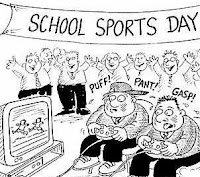
Step away from the controller, get up off the couch and really go skateboarding
There is no arguing that today's teens are in a poor state of health. A recent studies point the finger at the toys our kids play with. This year's hot Christmas toys include Next Gen video game systems, Halo 3, Skate, and a range of others games, Hand Helds, Cell phones, ringtones, Computers, Bratz and Star Wars toys, but not a single toy which encourages physical activity or outdoor play.

The survey notes that the most popular toys during the 1970s were mostly related to physical activity; however, the Toy Retail Association site shows that lego toys tended to be the most popular. During the 70's a number of hit toys, which encouraged outdoor play, were hugely popular such as the spacehopper, rollerskates, the Chopper bicycle, stunt kites, and skateboards. Now we are in the age of electronica. Technology is useful, helpful, and fun but it can also make us lazy and stressed.

Wednesday, September 26, 2007

Exercise and Fitness for Kids

Children need to play move and learn get them involved in skateboarding today
Although poor eating habits get a lot of the blame for the rise in childhood obesity, another very big factor is that kids just aren't as active as they used to be. Unfortunately, the focus for many people on battling childhood obesity is only on improving nutrition, like making school lunches more nutritious and taking soda out of schools, but doesn't do enough to actually get kids more active. As with improving their child's eating habits, parents can have an important role in helping their kids more physically active. In addition to more physically active, unorganized free play, getting involved in youth sports, such as soccer, baseball, and gymnastics, etc., can be a good way to encourage kids to be active.

How Young Is Too Young For Sports?

Since most youth sports programs for young children are very noncompetitive and are just about getting kids to be active and learning some basic rules, even older toddlers and preschoolers can play some sports. In fact, many communities now have programs like Soccer Tots for toddlers who are 20 months and older. Depending on where you live, you might also find:

Gymnastics - gymnastics programs are available for kids at almost any age, even infants and toddlers, like at The Little Gym, and get more physically demanding as your child gets older.

Swimming - although the AAP doesn't recommend formal swimming lessons until children are 4 years old, an introduction to the water type Aquatics program is okay for toddlers if they are well supervised.

Flag Football - typically age 4 and above.

T-ball - typically age 4 to 7.

Soccer - the YMCA has a Small Fry Soccer program for preschoolers over age 3.


Your local YMCA and their Youth Super Sports program is a good place to look for noncompetitive sports for younger kids. You might also find a youth sports program through your city, a private association, or a larger church in your area. Keep in mind that youth sports that are run by private associations tend to be more competitive than the YMCA, church groups, and most city leagues. Benefits of Starting Sports Early

Although some parents try to avoid youth sports until their kids are older, like 9 or 10 years old, because they want to avoid what they think is a competitive environment for their younger children, it is important to remember that most youth sports for younger kids are noncompetitive. Of course, you could have your 7 year old tryout for a tournament baseball team that travels from state to state with the goal of going to the Little League World Series or a football team that practices 4 days a week, and they would both likely be ultra-competitive. But you could just as easily join a team at the YMCA that doesn't have tryouts and doesn't keep score.

Some benefits of starting sports early, in addition to teaching responsibility, teamwork, and commitment, etc., include:


  • Avoiding childhood obesity.

  • Encouraging a healthy lifestyle and continued physical activity as they get older.

  • Building motor skills.

  • Making new friends.

  • Less time to watch TV.


And if your child starts playing sports early, he or she can play a variety of sports, or all of them, and get a better idea of which one they like best.

Team Sports vs Individual Sports

In addition to differences in motor skills and how well they play sports, kids can have very different personalities and temperaments. Some are outgoing and competitive and love to play team sports, like soccer, basketball, and baseball, while others are overwhelmed with the idea of being on the field with a large group of kids. If your child isn't interested in team sports, that doesn't mean that he can't be active.

There are many individual sports that might be a better fit, including:


  • skateboarding

  • surfing

  • swimming

  • biking

  • gymnastics

  • wrestling

  • tennis

  • golf

  • martial arts

  • track and field

  • dance


Keep in mind that some kids don't like team sports simply because they had a bad experience with one sport, team, or coach, and you might give another team or sport a chance or join a new team with a close friend so that he feels more comfortable.

Helping a Late Bloomer

Some children don't like sports because they just aren't as good as the other kids on the team. Especially for younger kids, there can be sharp differences in their abilities and developmental levels, but instead of giving up on sports, it can be a good idea to get your child some extra help so he can catch up. This can include gymnastics classes to improve general motor skills, enrolling in a skill and fitness program to help develop your child's athletic skills, extra practice at home, or getting some lessons in the specific sport you are playing.

Original Source: About.com, Vincent Iannelli, M.D.

Keeping the Family Fit

Get those kids off the couch and outside skating
Getting fit is almost always at the top of adults’ to do list. But what about the kids? Too often couch-potato parents raise stroller-potato youngsters. With 10 percent of 2 to 5-year-olds and 16 percent of 6-to19-year-olds already overweight in the United States—and rising obesity rates in the rest of the world, experts say it’s crucial to get children moving early. Habits formed in childhood can often extend through adulthood. As New York pediatrician Jennifer Trachtenberg notes, “active kids do become active adults.” But that doesn't mean dragging your kids to the gym every day. “Any type of exercise is good, as long as it’s supervised, and parents are using common sense," says Keith Gorse, chair of the age-specific task force for the National Athletic Trainers’ Association.

Girls and boys just want to have fun. So let them. “Kids should play. They should move. They’re wired for these things naturally,” says pediatrician Peter Belamarich, associate professor of clinical pediatrics at the Albert Einstein College of Medicine in New York. Don’t forget to get down on the floor and play with your kids. Mike Monroe, a New York-certified strength and conditioning specialist who is lead trainer for an exercise program called PUSH, lets his 1-year-old son, Miles, crawl around him and on top of him. He also rolls a ball to Miles’s right side and then to his left. “People overanalyze what they think will help advance their kid,” says Monroe. Cedric Bryant, chief exercise physiologist for the American Council on Exercise, says he was like a “tree” for his four sons, now 10, 13, 15 and 17, when they were little, encouraging them to climb all over him. “One of the biggest mistakes parents make is to think it really has to be this really complex, packaged program and approach,” says Bryant. “The key is just to get your children to move. Just make sure it’s fun.” Don’t rush into organized sports. The American Academy of Pediatrics recommends only 15 minutes of “structured activity” for preschoolers. After all, little kids’ attention spans are short, and they should be playing and exploring rather than doing formal calisthenics. The AAP statement also notes that participating in sports that aren’t age appropriate can cause problems: “When the demands of a sport exceed a child’s cognitive and physical development, the child may develop feelings of failure and frustration.” Enrolling them in ballet or gymnastics for tots is fine, with a caveat. “The key is not to take it too seriously,” says Dr. Angela Smith, an orthopedic surgeon at the Children’s Hospital of Philadelphia who is past president of the American College of Sports Medicine. Whether your child grows into a basketball superstar comes down to nature and nurture, says Small. “There’s genes and what you do with those genes.”

Turn off the television. The American Academy of Pediatrics recommends no TV for kids under 2, and no more than two hours of total screen time (TV, videogames, computers) for older children. Belamarich, a New York pediatrician, finds it sad when he asks kids to tell him about their hobbies and they say Playstation and XBox. “I’m seeing a bunch of kids pushing buttons hour after hour,” he says. Kids who watch more than 10 hours of TV each week are more likely to be overweight, aggressive and slow to learn in school, according to the American Medical Association. There are also concerns that kids who are “over stimulated” by TV and videos may be more prone to Attention Deficit Disorder. If your kids can’t resist the lure of the computer, have them engage in a “learning activity instead of a mindless activity,” says Vehrs of BYU.

Be a good role model. “Set the example of knowing that activity is as important as brushing your teeth,” says Sandra Perlmutter, former executive director of the President’s Council on Physical Fitness and Sports and an adviser to a company called athleticBaby. It’s good for kids to see you head out on a run. (But don’t take them with you in a Baby Jogger until they’re at least six months old because they lack sufficient control of their heads.) Walk with your little ones. Or get them to “exercise” with you. Every day, Baton Rouge, La., speech pathologist April Garrity, 29, and her daughter, Susanna, do “downward facing dog” and other yoga moves together. Susanna also likes doing push-ups along with her dad. “They see us working out,” says Garrity. And they naturally want to join in the fun.

Environmental Design Changes: Ways to Help Reduce Childhood Obesity

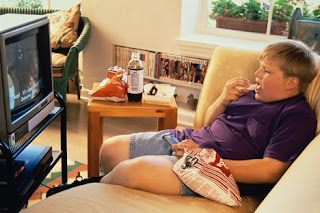
This kid needs a skateboard and to go outside and play!

Did you know that physical inactivity has been documented to cause numerous physical and mental health problems, is responsible for an estimated 200,000 deaths per year, and is shown to contribute to the obesity epidemic? Among preschool children and adolescents, obesity has doubled since the 1970s. The percentage of obese children 6 to 11 years old has tripled. Turning these statistics around means increasing children’s physical activity and improving what they eat. Much research has focused on educating children and changing their behavior, but these approaches have had limited success. Changing the environments in which children eat and play is now seen as an essential strategy in fighting the obesity epidemic.

Environmental barriers to healthy eating and activity

A panel of experts convened by the Institute of Medicine recently identified five factors in the environment that are barriers to healthy eating and physical activity for children:

• Pressures on families to minimize food costs and preparation time, resulting in frequent consumption of convenience foods high in calories and fat;

• Reduced access to and affordability of fruits, vegetables, and other nutritious foods;

• Urban and suburban designs that discourage walking and other physical activities;

• Decreased opportunities for physical activity at school, after school, and reduced walking or biking to and from school;

• Competition for leisure time that was once spent playing outdoors with sedentary screen time.

Listed below are some ways to change these five environmental factors to help solve the childhood obesity epidemic:

Changing the environment to increase children’s physical activity:

Safe places to walk and play help children to be more active. Many children and youth lack opportunities to be physically active. Walking or bicycling to school is increasingly uncommon and daily physical education has been cut from most schools (only 6 percent of middle schools provide it). More than one-third of high-school students nationwide are not getting recommended levels of moderate or vigorous physical activity.

Children need safe and accessible places where they can be active. Special attention may be needed for lower-income and minority communities, which tend to have fewer parks, sports facilities, bike paths, pools, and other places to be active.

There is strong evidence that access to facilities, like parks, and activity programs is associated with more activity for both children and adolescents. Some studies of preschool children have found that the more time spent outdoors, the higher the activity level.

Active living for children: The trip to school

Children can get regular, sustained physical activity walking, bicycling, or skateboarding between home and school, but distance, traffic, and crime are all barriers. Research shows environmental changes can help.

More children walked to school where there were sidewalks. For example, A Safe Routes to School program in Marin County, California, that included both safety improvements and encouragement, increased the number of children walking to school by 64 percent in two years. Children whose route to school passed a completed Safe Routes to School safety project at 10 elementary schools in California were more likely to increase walking to school (15%) than children whose route did not pass the improvement (4%).

Creating activity-friendly environments at school

Once at school, research shows the environment influences children’s activity levels. This environment includes the presence of effective PE classes and opportunities to be active during recess and the lunch break. A Centers for Disease Control review of 14 studies found that enhancing PE classes by increasing their length, or having students be more active throughout the class, consistently improved students’ physical fitness.

Five to seven year old students spent 18 additional minutes per day in active play after the pavement on school grounds was marked for play. Providing balls and other equipment to ten and eleven year olds increased their active play during recess by 24 percent.

Middle school students were more active throughout the school day if school activity areas had more facilities and if equipment and supervision were provided.

Improving safety to increase activity

In at least one study, adolescent girls were less active outdoors when they lived in high-crime neighborhoods. Parental concerns about traffic and ‘stranger danger’ are clearly linked to children’s activity levels. A Chicago study found children were physically active for an extra 49 minutes a week in safer neighborhoods than in unsafe neighborhoods.

Traffic safety is critical, pedestrian injuries are a leading cause of injury death for children five years and older. Several studies show that specific street improvements can improve child pedestrian safety. Speed bumps reduce the chance of child injury. Children were about half as likely to be injured by a car in their neighborhood if they lived within a block of a speed bump. It is more important and probable to reduce speed than to reduce traffic volume to improve child safety.

Changing the environment to reduce screen time

Kids spend more time watching TV than in school. While the results are somewhat mixed, studies show that TV and video time may encourage obesity both by displacing time that might be spent being physically active and through exposure to advertisements that encourage children to eat high-calorie, low nutrition foods. The American Academy of Pediatrics and Healthy People 2010 recommend no more than 2 hours per day of TV.

Interventions aimed at decreasing sedentary behavior can increase physical activity and reduce body mass index. Eliminating screen time for 10 days, and then restricting it to 7 hours a week was linked to lower body mass indexes for 3rd and 4th graders who also took classroom lessons and had a “TV budget” device to use at home.

If children must ride a stationary bicycle to activate the TV at home (1 min. pedaling = 2 min. viewing) TV viewing drops dramatically. At the end of one study the children were watching 1.6 hours of TV weekly, compared to 21 hours for a control group.

The research to define healthier food and physical activity environments for children and adolescents is starting to suggest some fruitful strategies. Studies have shown correlations between environmental factors and physical activity levels or eating habits, and several have demonstrated that changing the environment can change behavior. Few studies show a direct link between environments, or environmental changes, and reduced obesity. Nonetheless, the limited research to date does point to environmental change as a promising strategy in fighting childhood obesity.