Showing posts with label extreme sports. Show all posts

Saturday, October 6, 2007

Adrenaline Junkies and the Skateboarding Appeal

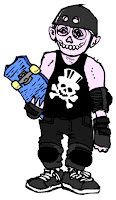
Skateboard Helmet and Pads helped Boogie reach 59. Boogie is wise beyond his years!
The popularity of skateboarding has soared and plummeted since the sport's inception more than a half century ago, much like skateboarders themselves. But now it is more popular than ever.


Skateboarding originated with California surfers in the 1950s who were trying to surf on land. Today, this relatively low-tech sport has become a subculture in almost every American city and town. But it has always been more of a pastime for the fearless young, as skaters, like Anthony Manning, Marissa O'Guinn and Sean Gates, experience the highs and lows of defying gravity.

"It makes me feel good like when I land a cool trick that I've been practicing for a while. When I go down something and do a trick, and it look cool. It's really exciting," says skateboarder Anthony Manning.

Marissa O'guinn, also a skateboarder, adds, "It's really exhilarating, skateboarding. I think that's what attracts most people to it. I guess just knowing there's a possible risk within it, it's just what makes it exciting."

"It's just a really, really cool feeling because, I mean, you are just flying through the air, and you are just all weightless and stuff. Also, in the pool they have tiles so when you hit them they have a certain sound. And, it's just a really, really cool, " says Sean Gates, a fellow skateboarder.


Boogie is a 59-year-old skateboarder


But skateboarding is not just for the young. Some skaters hang on to this adrenaline-fueled hobby into middle age. As a skateboard veteran, Boogie enjoys the excitement of a good ride without taking safety lightly. "Now, I want you to know that wrist guards cure insecurity because they protect you falling forward. They protect your hands, and then you wear this [helmet] to protect your head from falling backwards. That, and a pad right here, along with the pads here. And this is the only reason that you get to skate when you are 59 years old."

With advances in technology, today's skateboards are lighter and faster than boards from the past. This means that skaters can now do some wild tricks - things that the first skateboarders never dreamed of.

Skateboarding involves speed, balance and coordination, and can sometimes result in serious injuries. According to the U.S. Consumer Product Safety Commission, more than 26,000 people need hospital emergency room treatment each year in the U.S. for injuries related to skateboarding.

Manning says, "I broke my finger. I cracked my ribs." O’Guinns recalls, "I fell and rolled down a street."

The skateboarding technique of holding on the edge

The sense of danger has a lot to do with the popularity of skateboarding. For others, skateboarding means freedom and self-expression. For Anthony, it is a chance to develop a unique, personal style. "It's really like no pain, no game. If you can't take the pain, then you might as well not skateboard." Once thought to be another passing fad, skateboarding is an extreme sport that appears to be here to stay.

Original Source: VOA.com, By Sarah Zaman

Friday, October 5, 2007

Parents Grappling With Skateboard Phenomenon

Your kids could be the next big thing in skateboarding
So, you took your son and daughter to the X Games and they got one look at Kerry Getz and Tony Hawk flying through the air and they decided right then and there they wanted to be a skateboarder. Along with the rest of the passing interests, the guitar that sits unplayed, the soccer cleats in the garage and the ice skating lessons that went nowhere, this must be the next phase, right? Maybe not.

"It's a lifestyle," said Steve Bradley, a skater and employee at Board Stiff in Media. "Everybody I know that skates, it's not all they think about, but it's always in their mind. The way they dress is from a skateboarding background. The way they act is from a skateboarding background. It's the basis of someone's lifestyle."

Bradley should know. The 22-year-old has been skating most of his life. Like the rest of the knowledgeable staff at the Media shop, he knows every nook and cranny of Delaware * County, skateboard-style. For around $130, a new skater can get set up with a board, trucks * and wheels *. Then it's all up to them. Bradley expects there will be another new generation of skateboarders after this summer. He has seen a sharp increase in sales since the X Games came through Philadelphia * last year and he is expecting the same sort of reaction again.

It's not just kids, Bradley said. The twenty- and thirtysomethings who stopped skating years before have been bitten by the bug again.

Like most longtime skaters, Bradley is skeptical of the X Games, Big Business, and the influence ESPN has over his beloved sport.

"As far as the X Games go, it's good for business," Bradley said. "It's good to get the kids out to see the pros. It helped make skateboarding huge. But personally, I won't go down to see it."

Bradley, like most skaters, is a street skater, a discipline that requires skaters to be creative when turning tricks. There are no set-up ramps, no half-pipes for street skaters. All you have are your board, yourself and whatever your environment provides, be it railings or benches or curbs.

"The best place to learn is skating with your friends in a cul-de-sac or in your neighborhood," Bradley said. "I don't recommend skate parks to kids who are just beginning because they are going to run into people who know what they're doing and they could get hurt."

There are no skate parks in Delaware County. The closest are in Avondale, Chester County, Willow Grove and in Ocean City, Md.

The most well-known natural skate park was in Philadelphia's FDR Plaza, better known as LOVE Park. Skaters from all over the world came to Philadelphia to test their skills at the park, and its popularity spread through video games and word of mouth. That is, skaters used to come to LOVE Park. That was before the city renovated the park and made it inhospitable to skaters who are now not welcome. Plans for a sanctioned skate park in Philadelphia near the Art Museum have been put on hold as city council members fight over the logistics. With no skate parks, and with Philadelphia out of the equation, kids in Delco do their riding in the street -- if they can find a street where skateboarding is allowed.

In Springfield, skateboarding is a crime in all public places. Media restricts skating in the downtown area. Bradley said the crackdowns have the opposite effect on young skaters.

"When skateboarding is banned, it's going to make kids want to do it more," Bradley said.

According to Bradley, the best places to skate are big open parking lots, especially at high schools. The best, Bradley said, was Strath Haven, but the school has since been placed off limits by police. With a sigh, Bradley repeats the often-heard lament of most skaters. "Skateboarding," he said, "gets a bad rap." It may look a little unorthodox. Its participants may not be cut from the "Leave it to Beaver" mold and the sport may scare a certain generation. But if you give it a try, it may lead to a whole new outlook on life. And that new skateboard could get considerably more use than that out-of-tune guitar.

Original Source: Delco Times, By Paul Flannery

Skater Punks, an essay by Kathy Fish

Skaters Need Skateboards. Don't just sit there, Get involved Today!
Skater Punks You know exactly what I am talking about. We have all seen them: the thrashed skate boards with nightmarish graphics, the bizarre array of boxers peeking out of the ridiculously baggy pants, jewelry protruding from places previously only inhabited by the stray hair trying to avoid being plucked, that's right, the skater punks. They aren't just boys or men; girls who played dress up and Barbie have thrown off the perception of pale pink and purple and are clad in black, brown, army green or any drab variation of the ominous colors Generation X has chosen for their coat of arms. Young men and women dress the same, walk the same, skate the same and sport the same flippantly arrogant attitude. What on earth would possess the youth of our nation to dress, behave and mutilate themselves in such a manner? Have you ever seen an X-Games skate board competition? These people are amazing. Why would you waste that athleticism and agility on a sport that has nothing to offer but a bad reputation, injury and trouble with the law?

"Mom, I'm home! Guess where Grandma took me to today. We found a skateboard at a garage sale and we bought it for $2.00 and we went to the skate park. It is so cool. I met some new friends and they showed me some tricks. Grandma is going to take me back next week," Conner, my then six year old, excitedly gushed as he walked through the front door.

Fear and anger seized me. I didn't know who to yell at first. Conner, seeing the fierce look in my eyes, yelled, "Grandma made me do it!" In her quest to become "cool," grandma had been turned to the "dark side." In Benedict Arnold style, facing battle and guaranteed desecration of her sainthood, she caved, switched allegiances, and sold me out for the price of a smile. I couldn't trust her, or the vipers she was now "hangin" with. Disbelief engulfed me like a dark, damp heavy cloud. My ally was gone, deserted; I stood alone to bear accusations like "you don't understand," "my friends who have cool parents get to skate," "you're closed minded and prejudiced," "just because you're old doesn't mean you know everything." The verbal battle was in full array and the arrows were hitting their target.

I pause from the narration at this time to relate an observation that has come as a morbid dose of reality for me. You will all have the following experience, at one time or another, it is unavoidable. You will supply grandchildren for your parents who have shamelessly begged, bribed, pleaded and blackmailed you to procreate. By giving in to their pleas you will have equipped them with the opportunity to earn their sainthood. Then, watching you stagger from a near fatal battle wound, they will step forward, take the sword from your child's hand and drive the final blow straight through your heart. With this one act they will forever endear themselves to your offspring and irrevocably reveal their true alliances— with them, against you.

'You know honey, you really should come check out the skate park before you make your final decision," a woman I did not know, who bore a striking resemblance to my mother, cooed logically. I spun around, a cornered, wild animal sensing the battle to ensue. "How dare you...We have talked endlessly about the problems with the youth of today, not the least of which is the 'skater-tude'... I entrusted my child to you and this is where you take him?...I don't care if he asked you to, be the adult,...show some back bone. You never had a problem saying the word 'no' when I was his age." My emotional diatribe was unashamedly being ignored. The traitor smiled, winked at Conner and said over her shoulder as she turned to leave: "Conner and I would be happy to let you tag along next time." I was speechless.

Defeated, weary from the staunch defense of ideals and perceptions my faculties began to call an all out retreat. "What could it hurt to go?...are you really afraid of some skater punks?...ratify your assumptions...prove your perceptions...isn't Conner worth your time...are you seriously going to let a 70-year-old grandma be more open-minded than you?" Finally with a sigh of surrender, "I'll go."

As I walked up the dirt trail to the "bowls" I tried to not look as scared as I felt. At first glance all I could see was concrete. There are two large "bowls" that are side by side and have a small lip that connects them. The "track" is the ring around the outer edge of the cement that incorporates two large ramps for building speed for jumps. In the middle there is a crisscross design with stairs and rails for "grinding." The design was ingenious, not much space but lots of options.

Conner threw his board down, put on his helmet, and off he rolled; around the track, up and down the ramps over and over, his smile spreading wider and wider across his innocent face. "Hi Conner," called a tall stereotypical skater. I bristled, started to step forward and the icy stiletto fingers from my childhood grabbed my arm. Without a word my mom rescued Conner from certain social death. "Hi Grandma, who's your friend?" the skater called out. Introductions were made and the grip on my perceptions began to erode.

Then my fears were realized, Conner took a nasty spill trying to grind. His board was too "sticky" to slide on the metal rail and he landed on his elbow and hip. To my surprise the skater punk got there before Conner's over protective mom. He gently picked him up, asked if he was okay, looked to make sure there was no blood, and walked him over to sit down.

"Next time borrow some of my wax to rub on the rail so it slides," came the helpful suggestion from the "punk." I was dumbfounded. Where were the "flippantly arrogant attitudes," disrespectful indifference, and the scorching defiant eyes? "He'll be okay, don't worry," the punk said reassuringly. "Thanks" I mumbled. "Mom, you said you rode a skateboard when you were young, try mine, its fun." "You rode a board? How cool, hop on and see if you remember how to roll" the skater kid smiled. "I wish my parents did something cool like that, then maybe they would understand. You are lucky Conner."

I didn't know whether to be embarrassed or proud. My tattle-tale conscience reminded me of those ten minutes earlier I was reciting the evils of skateboarding to myself. I cautiously placed Conner's board down and assumed the stance. The wheels rolled slowly at first, then faster and my confidence began to build. The adrenaline rush was instant. The faster I went the more intoxicated I felt. What a rush. I could do this all day.

"Mom, could I have my board now?""One more time around," I pleaded as I rolled quickly by."Come on mom, it's my board." I slowed down and jumped off. Conner took off and yelled "Hey mom, watch this."

Teachers come in all shapes, sizes and wear all kinds of different clothes. From eight to eighteen to seventy there are many different people from diverse walks of life that can show us things about who we are, who we think we are and most importantly who we want to become. I didn't change my choice of clothes, music or friends, but my custom board and pierced belly button have raised some eyebrows and given me the opportunity to do a little teaching of my own.

Original Source: realskate.com

Tuesday, September 25, 2007

Today's society is a little more extreme

Let the rebel inside you out to pick up a skateboard
Today's society is a little more extreme than it used to be. We drive faster, hit harder and take more risks.

Decades ago most kids dreamed of becoming a star football, baseball or soccer player. But kids today are more likely to pick up a skateboard, in addition to playing other more traditional sports. Skateboarding, one of the fastest growing sports behind snowboarding, is now considered normal.

"(Skateboarding) is still a form of rebellion, but it's approachable," said Andy Roberts, an undeclared sophomore.

That wasn't always the case. Skateboarding used to be considered the radical, bad-boy thing to do. It was a true underground sport.

Skateboarding has been in and out of popularity ever since it started. Many saw it as a fad, similar to lava lamps or bell-bottoms. Skateboarding rose in popularity in the early '80s when skaters built their own vertical ramps and formed a big underground movement. This is how skateboarding legends such as Tony Hawk got their starts. Then, as history repeated itself, the skateboarding fad faded out once again.

The hardcore skaters, however, didn't stop and the sport's popularity rose again in the '90s as skateboarding reappeared with a raw, edgy and dangerous attitude. Skateboarding came with the punk movement this time, and the image of the poor, angry skater-punk actually helped fuel its popularity.

Then in 1995, ESPN -- the self-proclaimed worldwide leader in sports -- expanded into the extreme sports vein with an extreme games competition in Rhode Island.

The competition was set up to create an international gathering of action sports athletes. The Extreme Games had 27 events in nine categories, which included bungee jumping, eco-challenge, in-line skating, skateboarding, sky surfing, sport climbing, street luge, biking and water sports.

The competition received an enthusiastic response from athletes, spectators and sponsors. The impressive reaction prompted ESPN to announce that the games would be held annually, instead of bi-annually as originally planned.

With the new year, a new name for the Extreme Games emerged: X Games. The X Games have grown each year since by adding more events, throwing bigger tricks and increasing media coverage.

In 2002, ESPN, ESPN2 and ABC Sports all covered the games. They set the record for the most watched X Games ever with nearly 63 million people tuning in. The first 24-hour X Games coverage was in 2006, when 10 different stations broadcast it.

Media coverage has played a huge part in the popularity of the X Games. The mainstream population depends on television coverage and is a major factor in pulling skateboarding and other extreme sports closer to mainstream.

It also helped that the marketing didn't come off as anti-authoritarian, said Devin Deaton, a junior in marketing.

The commercialization of new media and products continue skateboarding's growth, as well. Extreme sport video games, such as the Tony Hawk Pro Skater series, are popular with kids regardless of whether or not they skate.

Better parks and boards have evolved with the shift into mainstream. Skateboard-specific companies have arisen and now innovate and invent new things to better the sport.

Skateboarding is not the only extreme sport that has benefited from the X Games. Snowboarding, BMX riding and Motocross have seen rapid growth spurts after becoming a part of the X Games.

Snowboarding started in 1965 in Michigan when Sherman Poppen fixed two skis together so his daughter could surf down the hill. He called it the snurf. Jake Burton, Demetrije Milovich and Tom Sims specialized and refined their own board designs in the early '80s and helped get the snowboard industry rolling.

Through the mid-'80s, the snowboard craze grew. In 1997, the snowboard big air contest was a part of the first Winter X Games. Then a year later, snowboarders participated in the Winter Olympics for the first time in Nagano, Japan, with the slalom and half-pipe events.

Snowboarding has progressed and added more events to the X Games, such as the Superpipe, and is the fastest growing sport.

BMX, or bicycle motocross, started in the '70s when kids modified their bicycles to emulate their motorcycle motocross heroes. Imitation led to innovation and BMX became a sport all its own.

BMX was a part of the first X Games. The only event for it was stunt biking. In the years following, more events were added to the BMX event, including vertical riding, big air, flatland stunts, street stunts and racing.

Motocross, or Moto X, began after World War II with flat races. In 1971, Moto X held a race on a temporary course at Daytona. All races prior to it had been held in rural, countryside areas, but this race brought it to the people. A year later, Moto X races were brought to urban stadiums and its popularity increased.

The level of competition also grew. Through the '80s and '90s, teams, sponsors, manufacturers and others worked to bring Moto X to a new audience. They got their chance in 1999, when Moto X became an X Games event.

The X games have become a family event and a type of Olympics for extreme sports.

Thanks to the X Games, we can let the rebel inside us out to pick up a skateboard without being shunned by society.

Original Source: Daily Uthah Chronicle, Jessica Dunn