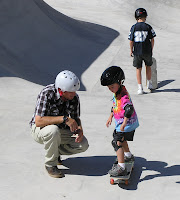
Skateboarding has become an increasingly popular recreational activity especially among many but primarily adolescents and teens. It is a fun and healthy sport that can give you a great low-impact aerobic workout, improves coordination and balance, and can give you a great sense of accomplishment and boosts self esteem. Because of this it is most important to make sure that you or your kids practice skateboarding safely and use protective equipment.
The American Academy of Orthopedic Surgeons encourages physical activity as part of an overall health and fitness plan. Staying fit and having fun while doing so is important to a high quality lifestyle, but always be safe!
Incidence of Injury
To improve skateboarding safety, a growing number of communities are providing skaters with designated areas and even skateboard parks. These typically have smooth surfaces, durable obstacles and rails, and professionally designed bowls and ramps or other designated skateboarding areas that are contained and located away from vehicle and pedestrian traffic.
Skateboarding is an activity in which you move quickly and generally over hard surfaces. This can lead to injuries that range from minor cuts and bruises to catastrophic brain damage. Each year in the United States, skateboarding injuries cause thousands of visits to emergency room and many children, adolescents, and adults to be hospitalized.
Most hospitalizations involve head injury. Even injuries that heal quickly can cause pain, anxiety, cost time, and money and in the worst cases lead to disabilities. This can include loss of vision, hearing and speech; loss of personal mobility, and thinking and behavior changes.
Serious skateboarding injuries happen when you lose control and fall or run into a motor vehicle, road hazard, pedestrian, another skateboarder or bicyclist.
You are at risk for injuries:
- If you don't use protective equipment.
- If you don't keep your skateboard in good condition.
- If you skateboard on irregular surfaces.
- If you attempt "tricks" beyond your skill level.
Sixty percent of skateboard injuries involve children under age 15; most of those injured are boys.
At highest risks are:
Inexperienced skateboarders: Those who have been skating for less than one week suffer one-third of injuries, usually caused by falls.
Skateboarders who do not wear protective equipment: Every skateboarder should wear standard safety gear. This includes a helmet, wrist guards, elbow and knee pads and appropriate shoes. Skateboarders who perform tricks should use heavy duty gear.
Skateboarders who go near traffic or use homemade skateboard ramps: Both activities are particularly dangerous.
Experienced skateboarders who encounter unexpected surfaces or try risky stunts: Irregular riding surfaces, rocks or other debris can cause you to fall. You can stumble over twigs or fall down slopes. Wet pavements and rough or uneven surfaces can cause a wipeout. Avoid risky behavior. Don't skateboard too fast or in dangerous or crowded locations.
Types of Injury
Skateboarding injuries often involve the wrist, ankle or face. Many injuries happen when you lose your balance, fall off the skateboard and land on an outstretched arm.
Injuries to the arms, legs, neck and trunk range from bruises and abrasions to sprains and strains, fractures and dislocations. Wrist fractures are quite common. Wearing wrist guards can reduce their frequency and severity.
Facial injuries include breaking your nose and jawbone
Severe injuries include concussion, closed head injury and blunt head trauma.
You can suffer permanent impairment or even death if you fall off the skateboard and strike your head without a helmet. Most brain injuries happen when your head hits pavement. You are most at risk if you skateboard near traffic and collide with motor vehicles, bikes, pedestrians or other obstacles.
Prevention
You can prevent most skateboarding injuries if you follow all of these recommendations:
Use a quality skateboard:
Skateboards have three parts, the skateboard deck (the board itself), the skateboard trucks (the mechanism to which wheels are attached), skateboard bearings (sits in the wheels and allow them to spin fast and smoothly), and the skateboard wheels. Shorter decks are best for beginners because they are easier to balance and handle. Skateboards have various characteristics for all types of riding including slalom or hill bombing, street and park or pools.
Keep your skateboard in proper working order:
You should inspect it before every ride. Look for problems that need repair. These can include loose, broken or cracked parts; sharp edges on metal boards; a slippery top surface; wheels with nicks and cracks, etc. Get professional help to repair serious defects.
Learn the basic skills of skateboarding: Especially how to stop properly.
Also learn slowing and turning techniques, and how to fall safely: If you are losing your balance, crouch down on the skateboard so you won't have as far to fall. Try to land on the fleshy parts of your body rather than your arms. Relax and roll.
Wear proper protective equipment:
Before getting on your skateboard, empty your pockets of all hard and sharp objects and put on your protective gear.
Essential protective equipment includes:
At highest risks are:
Inexperienced skateboarders: Those who have been skating for less than one week suffer one-third of injuries, usually caused by falls.
Skateboarders who do not wear protective equipment: Every skateboarder should wear standard safety gear. This includes a helmet, wrist guards, elbow and knee pads and appropriate shoes. Skateboarders who perform tricks should use heavy duty gear.
Skateboarders who go near traffic or use homemade skateboard ramps: Both activities are particularly dangerous.
Experienced skateboarders who encounter unexpected surfaces or try risky stunts: Irregular riding surfaces, rocks or other debris can cause you to fall. You can stumble over twigs or fall down slopes. Wet pavements and rough or uneven surfaces can cause a wipeout. Avoid risky behavior. Don't skateboard too fast or in dangerous or crowded locations.
Types of Injury
Skateboarding injuries often involve the wrist, ankle or face. Many injuries happen when you lose your balance, fall off the skateboard and land on an outstretched arm.
Injuries to the arms, legs, neck and trunk range from bruises and abrasions to sprains and strains, fractures and dislocations. Wrist fractures are quite common. Wearing wrist guards can reduce their frequency and severity.
Facial injuries include breaking your nose and jawbone
Severe injuries include concussion, closed head injury and blunt head trauma.
You can suffer permanent impairment or even death if you fall off the skateboard and strike your head without a helmet. Most brain injuries happen when your head hits pavement. You are most at risk if you skateboard near traffic and collide with motor vehicles, bikes, pedestrians or other obstacles.
Prevention
You can prevent most skateboarding injuries if you follow all of these recommendations:
Use a quality skateboard:
Skateboards have three parts, the skateboard deck (the board itself), the skateboard trucks (the mechanism to which wheels are attached), skateboard bearings (sits in the wheels and allow them to spin fast and smoothly), and the skateboard wheels. Shorter decks are best for beginners because they are easier to balance and handle. Skateboards have various characteristics for all types of riding including slalom or hill bombing, street and park or pools.
Keep your skateboard in proper working order:
You should inspect it before every ride. Look for problems that need repair. These can include loose, broken or cracked parts; sharp edges on metal boards; a slippery top surface; wheels with nicks and cracks, etc. Get professional help to repair serious defects.
Learn the basic skills of skateboarding: Especially how to stop properly.
Also learn slowing and turning techniques, and how to fall safely: If you are losing your balance, crouch down on the skateboard so you won't have as far to fall. Try to land on the fleshy parts of your body rather than your arms. Relax and roll.
Wear proper protective equipment:
Before getting on your skateboard, empty your pockets of all hard and sharp objects and put on your protective gear.
Essential protective equipment includes:
- A properly fitting helmet
- Wrist guards
- Knee and elbow pads
- Shoes
- Helmet
To protect your head from injury, always wear a properly fitting helmet. This is true no matter what your age, level of experience or location where you are skateboarding. Get a quality bicycle or multi-sport helmet. It should meet or exceed safety standards of the U.S Consumer Product Safety Commission (CPSC) or Snell Memorial Foundation. You may need to try on several sizes and models to find a helmet that fits your head correctly and securely.
A properly fitting helmet:
Is worn flat on your head with the bottom edge parallel to the ground
Sits low on your forehead
Has side straps that form a "V" shape around each ear
Has a buckle that fastens tightly (there should be room to put only two fingers between the strap and your chin)
Has pads inside that you install or remove so the helmet fits snuggly
Does not move in any direction when you shake your head
Does not interfere with your movement, vision or hearing
Replace your helmet when it is damaged, outgrown or at least every five years. You may need to replace it sooner if the manufacturer recommends it.
Please Note: California has expanded its bicycle helmet law to require that children under age 18 wear helmets each time they use a skateboard, inline skates, roller skates or scooter, making the state's child helmet law the strictest in the nation. Violators face fines, most of which benefits local health departments promoting helmet safety education and subsidizing helmet purchases for low-income families.
Wrist guards, knee and elbow pads and other gear: Wrist guards help support the wrist and reduce the chances of breaking a bone if you fall. Knee and elbow pads reduce the severity of cuts and scrapes, and prevent gravel burns. You should also wear closed, slip-resistant shoes, and consider goggles to keep debris out of your eyes.
Skateboard only on smooth pavement away from traffic, preferably in a supervised skate park.
Never hold onto the side or rear of a moving vehicle while riding a skateboard ("skitching"). You could fall or be thrown into oncoming traffic if the vehicle suddenly slows, stops or turns.
Never use your skateboard in wet weather.
Avoid skateboarding in crowded walkways or in darkness.
Always screen the area before you skateboard, inspecting surfaces for rocks and other debris.
Be careful with tricks and jumps.
Skateboarding skill is not acquired quickly or easily.
Don't take chances by skateboarding faster than your experience allows, or faster than is safe for conditions or the speed of other skateboarders. If you try tricks and jumps, practice them only in a controlled environment, such as a skate park that has adult supervision and appropriate access to emergency medical care.
Stay in shape. Prevent skateboarding injuries by keeping in top physical condition. It’s always a good idea to stretch and do conditioning exercises before and after any physically demanding activity. This is especially true for skateboarding and more experienced skaters who like to push the limits of their abilities.
Do not use headphones while skateboarding. If you can’t hear the cars passing by or the sound of your own skateboard wheels on the pavement you may find yourself in a collision you can’t walk away from.
Never put more than one person on a skateboard. This is true even for long boarders; come on this is just common sense!
Be considerate of fellow skateboarders, especially those who are younger and or less skilled.
Know what to do in an emergency. Skateboarding accidents happen, so you should always know what to do in emergency situations. Don't panic. Call 911 for medical assistance or an ambulance.
A properly fitting helmet:
Is worn flat on your head with the bottom edge parallel to the ground
Sits low on your forehead
Has side straps that form a "V" shape around each ear
Has a buckle that fastens tightly (there should be room to put only two fingers between the strap and your chin)
Has pads inside that you install or remove so the helmet fits snuggly
Does not move in any direction when you shake your head
Does not interfere with your movement, vision or hearing
Replace your helmet when it is damaged, outgrown or at least every five years. You may need to replace it sooner if the manufacturer recommends it.
Please Note: California has expanded its bicycle helmet law to require that children under age 18 wear helmets each time they use a skateboard, inline skates, roller skates or scooter, making the state's child helmet law the strictest in the nation. Violators face fines, most of which benefits local health departments promoting helmet safety education and subsidizing helmet purchases for low-income families.
Wrist guards, knee and elbow pads and other gear: Wrist guards help support the wrist and reduce the chances of breaking a bone if you fall. Knee and elbow pads reduce the severity of cuts and scrapes, and prevent gravel burns. You should also wear closed, slip-resistant shoes, and consider goggles to keep debris out of your eyes.
Skateboard only on smooth pavement away from traffic, preferably in a supervised skate park.
Never hold onto the side or rear of a moving vehicle while riding a skateboard ("skitching"). You could fall or be thrown into oncoming traffic if the vehicle suddenly slows, stops or turns.
Never use your skateboard in wet weather.
Avoid skateboarding in crowded walkways or in darkness.
Always screen the area before you skateboard, inspecting surfaces for rocks and other debris.
Be careful with tricks and jumps.
Skateboarding skill is not acquired quickly or easily.
Don't take chances by skateboarding faster than your experience allows, or faster than is safe for conditions or the speed of other skateboarders. If you try tricks and jumps, practice them only in a controlled environment, such as a skate park that has adult supervision and appropriate access to emergency medical care.
Stay in shape. Prevent skateboarding injuries by keeping in top physical condition. It’s always a good idea to stretch and do conditioning exercises before and after any physically demanding activity. This is especially true for skateboarding and more experienced skaters who like to push the limits of their abilities.
Do not use headphones while skateboarding. If you can’t hear the cars passing by or the sound of your own skateboard wheels on the pavement you may find yourself in a collision you can’t walk away from.
Never put more than one person on a skateboard. This is true even for long boarders; come on this is just common sense!
Be considerate of fellow skateboarders, especially those who are younger and or less skilled.
Know what to do in an emergency. Skateboarding accidents happen, so you should always know what to do in emergency situations. Don't panic. Call 911 for medical assistance or an ambulance.