
According to the U.S. Consumer Product Safety Commission, approximately 26,000 people are treated in hospital emergency departments annually with skateboard-related injuries. With the growing popularity of the sport and the opening of skateboard parks in the region, Community Medical Center urges kids to stay safe while enjoying these facilities.
Community Medical Center's Emergency Department, which earlier this year introduced a pediatric emergency service to provide care via a dedicated team of physician's board certified in pediatrics or emergency medicine and nurses, is dedicated to the safety of the children of its community. Laurence DesRochers, M.D., FACEP, chairman of emergency medicine at Community, says skateboarding is a great activity for kids, as it promotes good cardiovascular exercise, but he warns it is imperative that kids use proper safety equipment and make sure their skateboards are in good working order to help prevent injury.
"Skateboarding is a good form of exercise, as it helps children develop good balance and body control," he says. "However, young or inexperienced skaters may not have developed the necessary body strength and balance to help protect themselves from falls."
Dr. DesRochers says it is not uncommon for kids to experience sprains, strains, fractures, cuts and abrasions as the result of skateboarding. He adds that skateboarding at a skateboard complex or skate park is safer than skating in the streets or parking lots because skate parks have more even surfaces, no gravel, holes, curbs, moving vehicles or other elements that could cause additional injury during a fall.
"The majority of children who are injured in skateboarding accidents are under the age of 15," says Dr. DesRochers, who oversees an emergency department that includes eight dedicated pediatric beds and a number of special amenities for children. "Injuries, in most part, are due to falls and occur to both first-time and experienced skaters."
He offers the following skateboarding safety tips:
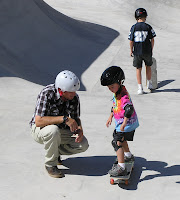
Inspect skateboards prior to use for things such as cracked boards, sharp edges, loose wheels or other defects; Skaters should always wear protective gear including a helmet, knee and elbow pads and slip resistant shoes. Padded clothing such as jackets, shirts and shorts are also available and recommended; Never ride in the street or hitch a ride on a moving vehicle; Don't skate in crowded areas and only one rider per skateboard.
Dr. DesRochers says learning to fall properly can also help lessen the chance or severity of injury. "Practice falling on a soft or grassy surface," he says. "If you are about to fall, crouch down low so you don't have as far to fall and try to land on fleshy parts of the body or try to roll instead of absorbing the fall with arms or hands."
In the event an injury should occur while skateboarding, parents are urged to contact their pediatrician or health care provider immediately, and in urgent situations go directly to an emergency room or call 911.
Community Medical Center's Emergency Department, which earlier this year introduced a pediatric emergency service to provide care via a dedicated team of physician's board certified in pediatrics or emergency medicine and nurses, is dedicated to the safety of the children of its community. Laurence DesRochers, M.D., FACEP, chairman of emergency medicine at Community, says skateboarding is a great activity for kids, as it promotes good cardiovascular exercise, but he warns it is imperative that kids use proper safety equipment and make sure their skateboards are in good working order to help prevent injury.
"Skateboarding is a good form of exercise, as it helps children develop good balance and body control," he says. "However, young or inexperienced skaters may not have developed the necessary body strength and balance to help protect themselves from falls."
Dr. DesRochers says it is not uncommon for kids to experience sprains, strains, fractures, cuts and abrasions as the result of skateboarding. He adds that skateboarding at a skateboard complex or skate park is safer than skating in the streets or parking lots because skate parks have more even surfaces, no gravel, holes, curbs, moving vehicles or other elements that could cause additional injury during a fall.
"The majority of children who are injured in skateboarding accidents are under the age of 15," says Dr. DesRochers, who oversees an emergency department that includes eight dedicated pediatric beds and a number of special amenities for children. "Injuries, in most part, are due to falls and occur to both first-time and experienced skaters."
He offers the following skateboarding safety tips:
Inspect skateboards prior to use for things such as cracked boards, sharp edges, loose wheels or other defects; Skaters should always wear protective gear including a helmet, knee and elbow pads and slip resistant shoes. Padded clothing such as jackets, shirts and shorts are also available and recommended; Never ride in the street or hitch a ride on a moving vehicle; Don't skate in crowded areas and only one rider per skateboard.
Dr. DesRochers says learning to fall properly can also help lessen the chance or severity of injury. "Practice falling on a soft or grassy surface," he says. "If you are about to fall, crouch down low so you don't have as far to fall and try to land on fleshy parts of the body or try to roll instead of absorbing the fall with arms or hands."
In the event an injury should occur while skateboarding, parents are urged to contact their pediatrician or health care provider immediately, and in urgent situations go directly to an emergency room or call 911.
Original Source: Toms River Times


