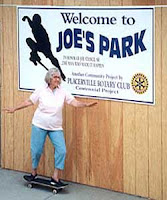
In suburban areas and inner cities alike, all across the country, a large number of young athletes find themselves with no place to play. When they skate in public areas, wherever they can find the space, they often end up facing fines, possible arrest, confiscation of their boards or worse. Yet when these young people ask their local governments for skateparks where they can skate safely and legally, they are often dismissed without consideration and told they will never get their skatepark.
But, as many towns and cities are finding out, a skate park's value lies not only in the athletic opportunities it provides, but also in the community it creates. In Lynnwood, a tough neighborhood of Los Angeles, the recent construction of a skate park has allowed young people, who might otherwise be fighting with each other on the streets, to come together to enjoy a common interest. Kids are crossing neighborhood boundaries to find refuge in the park, which has yet to experience the violence seen outside its gates.
Local governments are reluctant to build parks for a variety of reasons: the feeling that skateboarding is not a legitimate sport; uneasiness over creating a place for young people to gather; fear of lawsuits and liability issues; and, in many cases, because of pressure on local governments not to build parks from special interests.
According to Heidi Lemmon, a mother of a skateboarder and a skatepark activist, anyone trying to get a park built in their town should plan to face these and other obstacles. Her organization,
Skatepark Association of The United States of America, has revolutionized the process of getting skate parks built by teaching skaters and their supporters how to effectively work within the system and fight for skateparks in their communities.
For a long time, the very nature of skateboarding as individualistic and anti-establishment meant there was little organization within the sport. The introduction of leadership from skate park advocates like Heidi Lemmon has unified skaters around the country and given them focus. Her organization offers information and advice on how to deal with your local city council, how to qualify for a participating insurance plan for your park, the costs involved and how to raise that money, safety issues, where to find the best park designers and builders, and most importantly, how not to take "no" for an answer.
Skateboarding has been around for over 50 years. For much of that time it was an "underground" sport, forbidden in many places. Despite a resurgence of popularity in the 1980's and an estimated 9.5 million skateboarders in the United States today, skateboarding, up to now, has never been able to kick its outlaw image. Skateboarders continually suffer from that prejudice and as a result have a difficult time being taken seriously.
That may be changing as the number of skateboarders continues to increase. According to Jim Fitzpatrick of the International Association of Skateboard Companies, the results of the latest recreation and parks survey show that skateparks are the number one recreation request across the nation.
It is not only skateboarders who benefit from the parks. In-line skaters and BMX freestyle riders also need a place where they can legally ride and practice their tricks. Skateparks are now finding ways to accommodate these athletes as well.
Of the approximately 400 parks in the country, over 300 have been built in the last year, most with guidance from SPAUSA, and all with a lot of persistence on the part of these young athletes and their parents. Not only has their hard work paid off in the form of a place to skate, they have learned valuable lessons about how their government works, the good and the bad. These kids have achieved their goal and learned that they can make things happen in their lives and in their communities.
Original Source: Paige Stoyer / momsteam.com